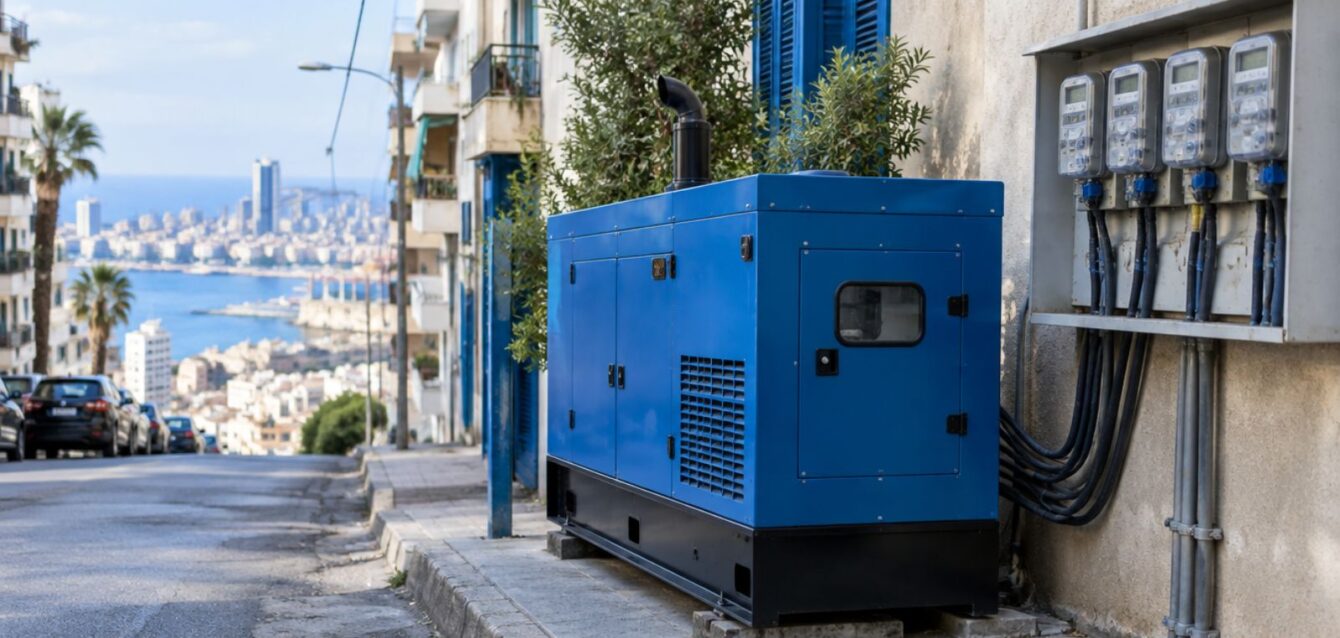
For millions of people in Lebanon, the neighborhood generator is as essential as water. Yet many generator operators still run their business with notebooks, handwritten receipts and monthly estimates. Subscribers argue about bills, collectors spend days going door to door, fuel prices change faster than tariffs can be updated, and the owner rarely knows the real profit per month. Generator billing software in Lebanon replaces this guesswork with accurate data and automated invoicing. This article explains what such software does, how it handles both ampere subscriptions and kWh billing, and how an operator can switch without disrupting subscribers.
The problem with billing by estimate
Traditional generator billing relies on a fixed fee per ampere subscription, sometimes combined with a meter reading taken by hand. Each step introduces errors. Readings are misread or skipped, notebooks are lost, subscribers who upgrade from 5 to 10 amperes are not updated in time, and fuel cost increases are passed on late or inconsistently. The result is lost revenue for the operator and mistrust from subscribers who suspect they are overcharged.
Official tariff guidance for generator kWh pricing, published periodically by the authorities, has also pushed operators toward metered billing. Applying a changing per-kWh tariff fairly across hundreds of subscribers is nearly impossible on paper.
What generator billing software does
Subscriber management
Every subscriber has a record: name, building, floor, phone number, meter number, subscription type (ampere or kWh), ampere limit, start date and balance. Changes such as upgrades, suspensions and new connections are logged with dates, so billing always uses the correct plan.
Meter readings
Readings can be entered through a simple mobile app by a field reader, who scans or selects the meter and types the value, sometimes with a photo as proof. With smart meters, readings arrive automatically. The software flags impossible values, such as a reading lower than last month or a sudden tenfold jump, before invoices are produced.
Flexible tariffs
Operators can configure kWh tariffs, fixed monthly fees per ampere, minimum charges and different prices for residential and commercial subscribers. When fuel costs change, the owner updates the tariff once and the next billing run applies it to everyone consistently.
Automatic invoices
At the end of each billing period, invoices are generated for all subscribers in one click. Each invoice shows previous and current readings, consumption, tariff, fixed fees and total due. Invoices can be printed or, more efficiently, sent as a message or PDF on WhatsApp.
Collections and receipts
Collectors record payments in the app, and subscribers receive an instant receipt. The owner sees in real time who has paid, who owes and how much cash each collector holds. Overdue subscribers receive automatic reminders.
Reports for the owner
Monthly reports show energy sold, revenue billed and collected, outstanding balances, consumption per building and estimated fuel efficiency. These numbers reveal which areas are profitable and where losses occur.
Ampere subscription vs kWh billing
Many operators run both models at once. Ampere billing is simple but unfair to light users and unprofitable when heavy users consume far more than average. kWh billing with meters is fair and aligns revenue with fuel cost, but it needs reliable readings. Good generator billing software supports both, so operators can migrate subscribers gradually, starting with commercial customers or new buildings.
Adding smart meters
Manual readings work, but smart meters remove the reading round entirely. Meters send consumption automatically, and many can enforce an ampere limit or cut supply remotely when a prepaid balance runs out. Operators with large networks usually recover the meter investment through reduced losses and fewer disputes. Read our overview of smart meters and generator billing in Lebanon for more on this transition.
Benefits operators report
- Fewer disputes, because every bill shows readings and the tariff used.
- Faster collections thanks to WhatsApp invoices and reminders.
- Recovered revenue from unbilled or under-billed consumption.
- Instant visibility of cash held by collectors.
- Time saved on manual calculations every month.
Switching without disrupting subscribers
- Digitize your subscriber list: import names, phone numbers, meters and plans from your notebook or spreadsheet.
- Verify meters: label each meter with a number or QR code that matches the system.
- Run one month in parallel: issue paper bills as usual while the software calculates the same bills, then compare.
- Inform subscribers: explain the new invoice format and the WhatsApp number they will receive bills from.
- Go live: switch to software-generated invoices and digital receipts.
Choosing the right software
Look for an Arabic-friendly interface, an offline-capable mobile app for readers and collectors, WhatsApp integration, cloud backups so data survives a lost phone or broken laptop, and support for smart meters when you are ready. Make sure you can export your data at any time.
How Software Senior can help
Software Senior builds energy management and metering platforms, from custom electronic boards to billing software. Our smart meter management solution covers reading, installation and removal workflows for field teams. Explore our IoT and electronic boards services to see how metering and software come together.
Frequently asked questions
Can generator billing software work without internet?
Yes. A well-designed mobile app stores readings and payments offline and syncs when connectivity returns, which matters during outages.
Is generator billing software suitable for small operators?
Yes. Even operators with a hundred subscribers save hours each month and reduce disputes. Cloud-based software keeps costs proportional to size.
Can subscribers check their balance themselves?
Many systems offer a simple link or WhatsApp message where subscribers see their latest bill, readings and balance.
A real-world example
Consider an operator serving 400 subscribers across six buildings, with two collectors and one reader. Before software, the reader spent four days a month on readings, the owner spent two evenings calculating bills, and roughly one subscriber in ten disputed their invoice. After moving to generator billing software with a mobile reading app, readings take two days, invoices are generated in minutes and sent on WhatsApp, and disputes fall because each bill shows the photo of the meter. When smart meters are added to the largest buildings, the reading round shrinks further and the owner can compare energy produced with energy billed to spot losses. The exact numbers will differ for each network, but the pattern is consistent: less manual work, fewer arguments and more of the generated energy turned into revenue.
Work with Software Senior
Software Senior is a Beirut-based software development, AI and IoT company with more than 15 years of experience in healthcare, insurance, government, energy and enterprise projects. Request a free consultation, call +961 3 014416 or email [email protected]. Answers to common questions are in our FAQ.