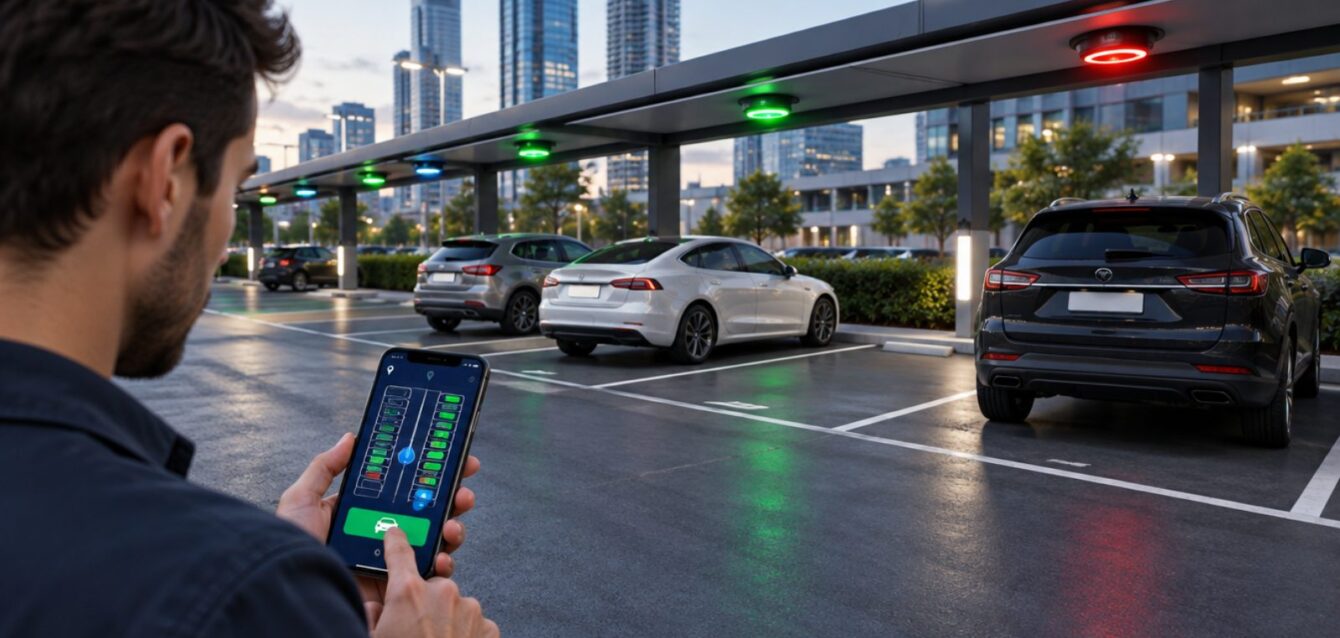
Finding a parking space in Beirut, Jounieh or Tripoli can take longer than the trip itself. Smart parking systems use sensors, cameras and software to show available spaces, guide drivers and automate payment, benefiting drivers, mall and hospital operators, and municipalities.
Components of a smart parking system
- Space sensors or cameras detect whether each bay is free or occupied.
- Guidance displays and LED indicators direct drivers to free spaces.
- License plate recognition for ticketless entry and exit.
- Mobile app or web link to find, reserve and pay for parking.
- Payment integration: cards, wallets, subscriptions and cash.
- Management dashboard with occupancy, revenue and reports.
Who benefits
Malls and hospitals improve visitor experience and revenue control. Universities and companies manage staff permits. Municipalities can manage street parking, reduce traffic caused by drivers circling, and collect fees transparently.
Connectivity
Outdoor sensors often use LoRa networks because of their long range and long battery life, while indoor car parks can use wired or Wi-Fi connections.
Data-driven decisions
Occupancy data reveals peak times and underused areas, helping operators set pricing, plan capacity and improve enforcement.
Frequently asked questions
Can drivers pay for parking by phone?
Yes. Smart parking systems can support app or web payments, subscriptions and ticketless entry using license plate recognition.
Can an existing car park be upgraded?
Yes. Sensors, cameras and software can be added to existing barriers and payment machines in phases.
See our IoT solutions.
Talk to Software Senior
Software Senior is a Beirut-based software development, AI and IoT company with more than 15 years of experience serving government, healthcare, insurance and enterprise clients. Contact us for a free consultation, call +961 3 014416 or email [email protected]. You can also read our FAQ.